
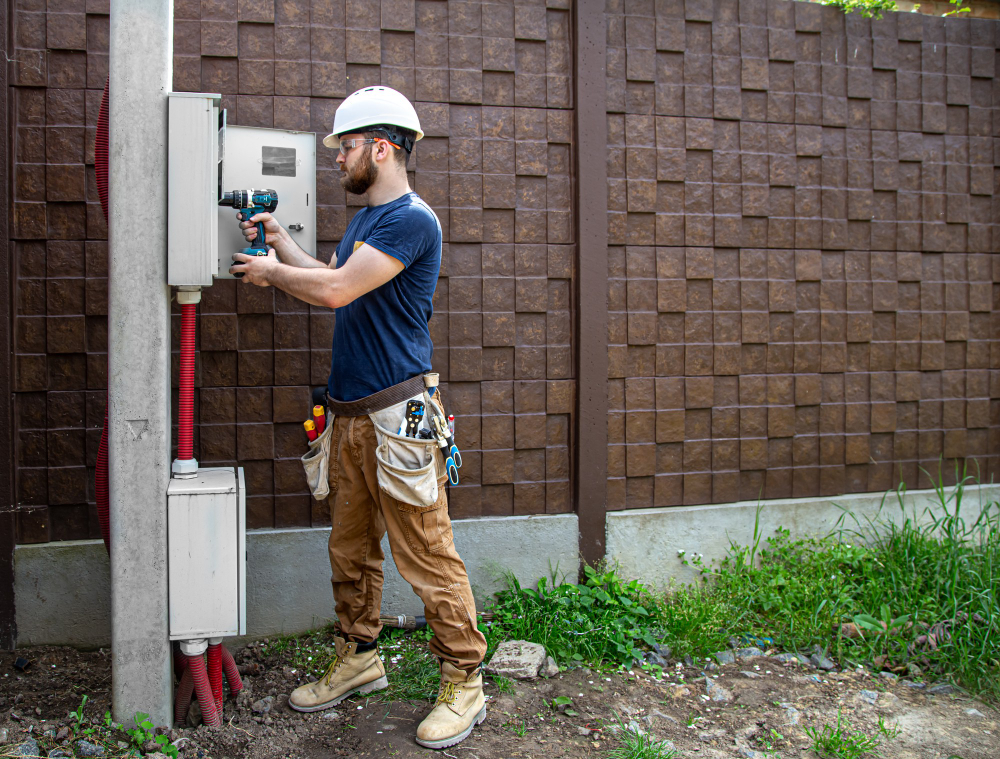

From Single to Three-Phase: A Perth Homeowner’s Guide to Power Upgrades and Trusted Electricians
Most Perth homes get by perfectly well on standard single-phase power, right up until a renovation, a new workshop, or an EV charger changes the equation. That’s when a call to a qualified 3 phase electrician often turns from a nice-to-have into a genuine necessity. Understanding when a home actually needs three-phase supply — and when it doesn’t — saves homeowners from either overspending on an upgrade they didn’t need, or underspending and discovering the switchboard can’t cope six months later.
Single-Phase vs Three-Phase: What’s the Practical Difference?
Single-phase power delivers electricity through one alternating current, which is more than adequate for lighting, standard appliances, and most household circuits. Three-phase power splits the load across three currents, which allows larger motors and high-draw equipment to run more efficiently and with less strain on the wiring.
For most Perth households, the trigger for considering three-phase supply is a specific piece of equipment: a large workshop tool, a bigger pool pump, a home theatre or server setup with heavy continuous draw, or an EV charger designed to run at higher output than a standard single-phase circuit comfortably allows.
Signs Your Home Might Need the Upgrade
A few practical indicators suggest it’s worth getting an assessment:
- Lights dim noticeably when a large appliance switches on
- The switchboard is already close to capacity with no room for additional circuits
- You’re planning a renovation that adds a workshop, studio, or significant new equipment
- You’ve had multiple appliances competing for the same circuit and tripping breakers as a result
None of these guarantee you need three-phase power, but they’re a reasonable prompt to get a proper load assessment rather than guessing.
What a Proper Load Assessment Involves
Before recommending any upgrade, a competent electrician should map out existing circuits, current draw, and realistic future needs rather than jumping straight to a quote. This typically includes checking the switchboard’s current capacity, reviewing which appliances or equipment are driving peak demand, and discussing what’s actually planned for the next few years — not just what’s needed today.
A well-scoped 3 phase power installation accounts for this future demand upfront, which avoids the common and expensive mistake of installing exactly enough capacity for today’s needs and nothing more.
What the Upgrade Process Actually Looks Like
For most homes, a three-phase upgrade involves coordination with Western Power to confirm the street supply can support the new load, followed by switchboard upgrades and, in some cases, new underground or overhead cabling to the property. It’s a bigger job than a standard repair, and timelines depend partly on the network operator’s scheduling rather than just the electrician’s availability.
Getting a clear, itemised quote upfront — including what’s covered by the electrician directly and what depends on network approval — avoids surprises partway through the job.
Why the Right Residential Electrician Matters for This Kind of Work
Three-phase upgrades sit at the more complex end of residential electrical work, and not every electrician does this kind of job regularly. Working with a residential electrician who has genuine experience with load assessments and network coordination — rather than someone who occasionally takes on a three-phase job when asked — tends to produce a smoother process and a system that’s actually sized correctly for the home.
It’s worth asking directly about recent similar jobs, rather than assuming general residential experience automatically covers this more specialised work.
Realistic Timeframes and Costs
Because three-phase upgrades depend partly on Western Power’s scheduling for street-supply confirmation, timeframes can vary more than for a standard repair. A straightforward switchboard upgrade where the street supply already has capacity might be completed within a couple of weeks of the quote being accepted. Where new supply infrastructure is needed, the process can stretch to several months, largely waiting on network approval rather than the electrician’s own availability.
Costs vary considerably depending on the scope, but homeowners should expect a proper three-phase upgrade to be priced as a significant home improvement rather than a routine callout — and be wary of a quote that seems unusually low without a clear explanation of what’s included.
Common Mistakes Homeowners Make With This Upgrade
The most frequent mistake is sizing the upgrade for a single piece of equipment without considering what else might be added later — a second workshop tool, a future EV charger, or an extension to the home. Retrofitting additional capacity after the fact is almost always more expensive than building in headroom during the initial upgrade.
The second common mistake is accepting a quote without confirming whether network approval costs and timeframes are included, which can lead to unexpected delays or additional charges partway through the project.
Life After the Upgrade: What Changes Day to Day
Once a three-phase upgrade is complete, most homeowners notice little difference in day-to-day household use — lights and standard appliances still run on whichever phase they’re connected to, exactly as before. The difference shows up specifically in the circuits designed to draw on the new capacity: a workshop tool that no longer bogs down under load, a pool pump that runs quieter, or a charger that delivers its full rated output rather than throttling back.
It’s worth asking your electrician to clearly label which circuits sit on which phase once the work is done, particularly if you’re planning further additions later. A clearly labelled switchboard makes any future electrician’s job faster and cheaper, since they’re not starting from scratch to understand the system.
A Realistic Scenario: Planning Ahead Pays Off
Consider a family in Bassendean planning a garage conversion into a home workshop with a table saw, a dust extraction system, and a compressor all running at once. Rather than waiting until the workshop was fitted out to discover the standard single-phase supply couldn’t handle it, they had a load assessment done during the planning stage.
The assessment confirmed three-phase supply was the right long-term solution, and — because the electrician also asked about future plans — the upgrade was sized to leave room for a small kiln the homeowner mentioned wanting to add in a couple of years. When that kiln was eventually purchased, no further switchboard work was needed at all, because the original upgrade had already accounted for it.
Working With Western Power: What Homeowners Should Know
Because any upgrade that affects the connection to the street supply involves Western Power, homeowners should expect their electrician to handle this coordination on their behalf rather than needing to liaise with the network operator directly. That said, it’s worth understanding the broad process: the electrician submits a connection application, Western Power assesses whether the local network has capacity, and any required network-side work is scheduled separately from the property-side electrical work.
This is also where delays most commonly arise, particularly in newer or rapidly growing suburbs where local network capacity is already stretched. Asking your electrician upfront whether they’ve had any recent experience with your specific suburb’s network capacity can give a more realistic sense of expected timeframes than a generic estimate.
Quick Reference: Is Three-Phase Actually Necessary?
As a rough guide, most standard households never need three-phase power, and adding it without a genuine driver is an unnecessary expense. The clearest triggers are a specific piece of equipment with a stated three-phase requirement, a home business with heavy continuous equipment draw, or a switchboard already at capacity before any new load is added. If none of these apply, a standard single-phase upgrade or additional circuit is usually the more cost-effective solution — a good electrician will tell you this honestly rather than upselling an upgrade you don’t need.
A three-phase upgrade isn’t something most Perth homeowners need to think about until a specific renovation or piece of equipment brings it into focus. When that moment arrives, a proper load assessment — rather than a quick guess — is what separates a system that comfortably handles the next decade of use from one that’s maxed out the day it’s switched on. Getting the right advice early saves both money and frustration down the track.