

Warehouse and industrial site managers tend to think about plumbing in terms of what’s visible and immediate: a leaking tap, a blocked toilet, a hot water system that’s stopped working. The systems that actually cause the expensive failures — backflow devices, stormwater soakwells, and the broader plumbing network supporting a warehouse operation — sit quietly out of sight until something goes wrong, usually during the wettest week of the year or the middle of a compliance audit.
This article covers three things every warehouse and industrial facility manager should understand: what backflow prevention is actually protecting against, how soakwell drainage systems work (and why they fail), and what warehouse plumbing maintenance looks like when it’s done properly instead of reactively.
Backflow prevention on industrial sites: higher stakes than most managers realise
Backflow happens when water flows backwards through a plumbing system — from a non-potable source back into the clean water supply — usually triggered by a pressure drop in the mains during firefighting, nearby maintenance work, or a burst main. On a standard office building this is a manageable risk. On an industrial or warehouse site with wash-down bays, process water connections, chemical storage, or fire sprinkler systems, the consequences scale up significantly, because there are simply more cross-connections where contaminated water could enter the system.
This is why Western Australian water authorities classify properties by hazard level and require registered, annually tested backflow prevention devices on anything above minimal risk. Backflow testing and compliance services exist specifically to keep that documentation current — not just a one-off installation certificate, but an annual re-test that catches device drift before it becomes a genuine failure.
The common trap for warehouse operators is inheriting a backflow device installed by a fit-out contractor years earlier, with no ongoing testing schedule ever handed over to the site’s facilities team. By the time anyone notices, the device may have been non-compliant for years — a problem that only surfaces when a water authority audit or an insurance review asks for the paperwork.
How soakwells work, and why they eventually stop
Stormwater soakwells are one of the most common — and most misunderstood — pieces of underground infrastructure on Perth commercial and industrial sites. A soakwell is essentially a large underground chamber, usually precast concrete rings or a plastic cell system, designed to collect stormwater runoff from roofs, car parks, and hardstand areas and let it soak away into the surrounding soil rather than overwhelming council stormwater systems.
Understanding how soakwell repairs and maintenance work starts with understanding why they fail: silt and debris entering the system over years gradually reduce the soakwell’s capacity to absorb water, and in sandy Perth soils this can happen faster than most site managers expect. A soakwell that worked perfectly when it was installed can slowly lose its drainage capacity as sediment accumulates at the base, eventually leading to pooling, surface flooding after heavy rain, or water finding its way into areas it was never meant to reach — loading docks, car parks, or building perimeters.
The warning signs are usually gradual rather than sudden: water taking longer to drain after rain, minor pooling that wasn’t there previously, or a soakwell that used to handle a downpour without issue now overflowing during moderate rain. None of these individually looks urgent, which is exactly why soakwell maintenance tends to get deferred until a genuinely heavy rain event exposes the problem all at once — often during exactly the kind of storm that makes emergency repairs most disruptive.
Periodic desilting is cheaper than emergency repair
A soakwell that’s periodically cleaned out — removing accumulated silt and debris before capacity drops significantly — can operate for decades. One that’s left until it fails completely may need excavation and partial reconstruction, a considerably larger and more disruptive job. For warehouse sites with large hardstand or car park areas feeding into a soakwell network, this is a genuinely material difference in maintenance cost over the life of the asset.
Seasonal timing matters more in WA than most managers assume
Perth’s rainfall pattern is heavily concentrated in a handful of winter months, which means a soakwell or drainage system that’s coped fine through a long, dry summer can be tested well beyond its working capacity the moment sustained winter rain arrives. This seasonal concentration is exactly why desilting and inspection work is best scheduled ahead of the wetter months, rather than treated as a job that can happen “whenever it’s convenient” during the year.
The same logic applies to backflow devices used in irrigation systems, which often sit dormant — and untested — over summer before being switched back on as watering schedules resume. A device that hasn’t been checked since the previous irrigation season is exactly the kind of gap an annual testing regime is designed to close, catching a fault before the system goes back into regular use rather than after.
For warehouse and industrial site managers, building this seasonal awareness into the maintenance calendar — rather than running every system on a flat, generic annual cycle irrespective of Perth’s actual weather pattern — is a small planning shift that meaningfully reduces the odds of a wet-season failure catching the site off guard.
Warehouse plumbing: higher wear, different priorities
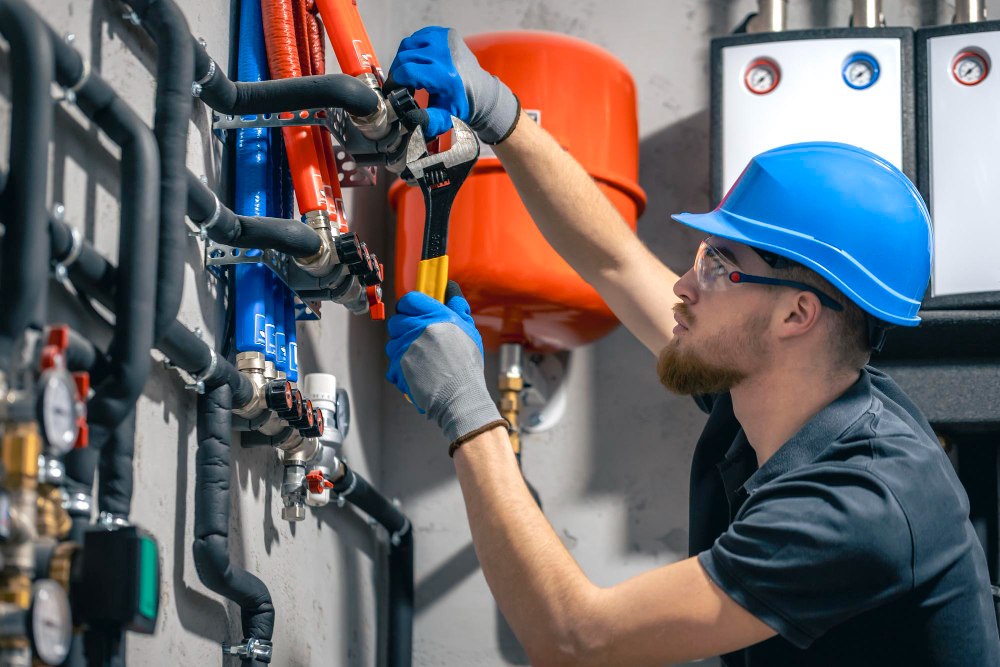
Warehouse and industrial plumbing systems see a different kind of use than office or retail plumbing. Wash-down areas, loading dock amenities, higher-volume trade waste, and in some cases process water lines all put more sustained load on pipework than a standard commercial tenancy would. Warehouse plumbing maintenance needs to account for this — higher-frequency inspection of high-use fixtures, and closer attention to drainage lines carrying heavier solid loads than a typical office kitchen or bathroom.
Amenities blocks in warehouse facilities also tend to see harder use with less day-to-day oversight than a corporate office — shift changeovers, larger workforces using a smaller number of fixtures, and less immediate visibility if something starts to go wrong. Regular preventative checks on these systems catch minor issues (a slow drain, a running cistern, a dripping tap) before they become the kind of failure that takes an amenities block offline during a shift.
Bringing it together: a maintenance rhythm that actually holds
The pattern across all three of these systems — backflow devices, soakwells, and general warehouse plumbing — is the same: none of them look urgent until they fail, and all three are considerably cheaper to maintain proactively than to repair reactively. For a warehouse or industrial facility manager, the practical answer isn’t a bigger maintenance budget; it’s a scheduled inspection regime that treats underground and out-of-sight infrastructure with the same seriousness as the visible systems everyone already prioritises.
A useful starting point is an annual site review that covers backflow test currency, a visual and functional check of stormwater soakwells (particularly ahead of Perth’s wetter months), and a broader plumbing health check across amenities and wash-down areas. None of these are large individual jobs. Together, they close off the three risks most likely to turn into an expensive, disruptive failure with little warning.
Why documentation matters as much as the work itself
One thing that separates well-run industrial sites from the rest isn’t necessarily how much maintenance they do — it’s whether they can prove it. A documented history of backflow test certificates, soakwell desilting records, and plumbing inspection reports gives a facility manager something concrete to show an insurer, an auditor, or an incoming ownership group. Without that paper trail, even a site that’s genuinely well maintained can look under-managed on paper — and in a compliance audit or an insurance claim, the paperwork is often what actually gets assessed.
For warehouse and industrial site managers, treating backflow prevention, soakwell maintenance, and general plumbing upkeep as a connected, scheduled program — rather than three separate reactive tasks — is the difference between managing risk and simply hoping it doesn’t show up this year.