
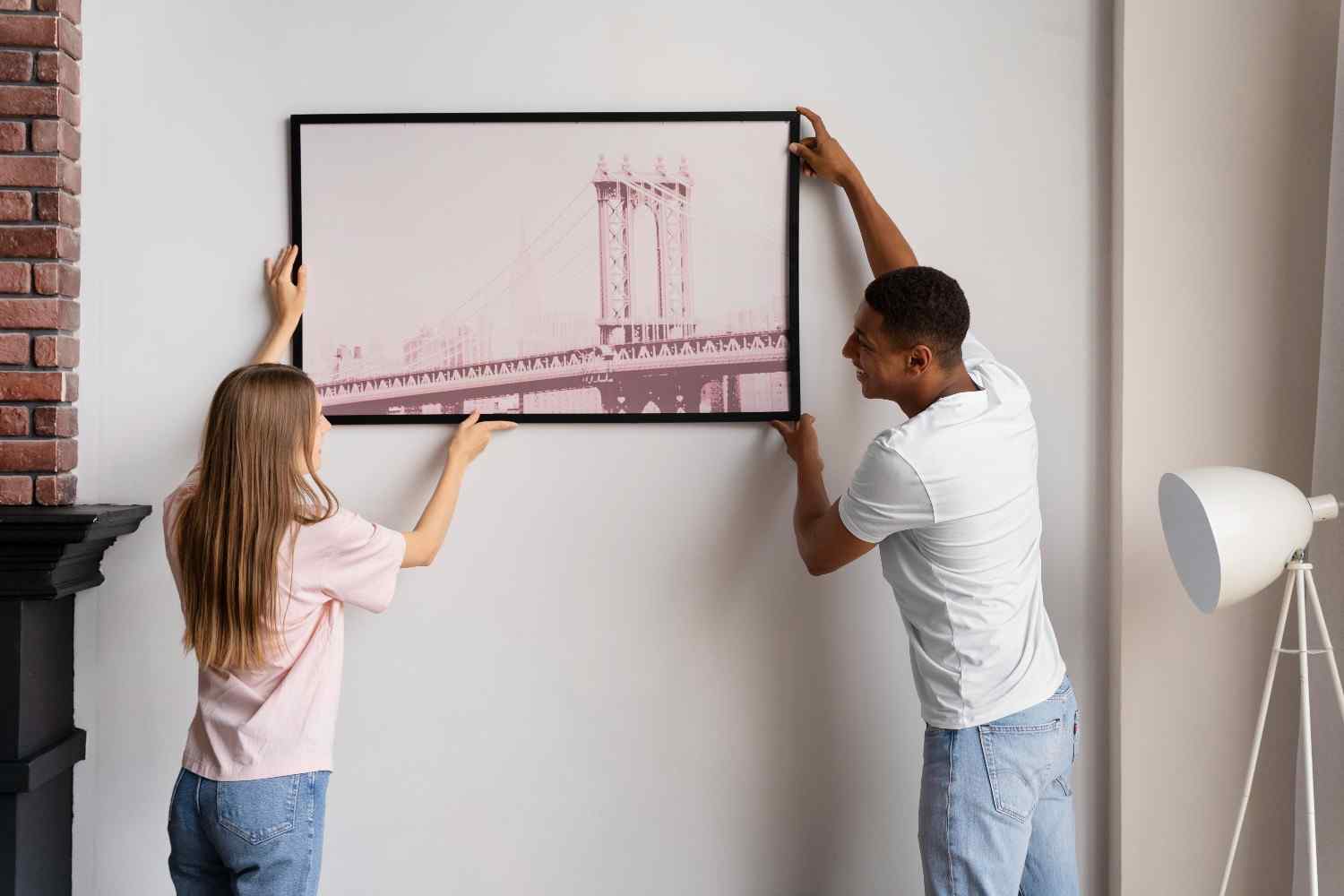

Walk into any home that feels genuinely well put together and you’ll notice something: the frames matter. Not in an obvious, look-at-my-expensive-frames way, but in a quieter sense — the artwork sits correctly in the room, the frames complement rather than compete, and everything feels considered.
It’s a detail that’s easy to overlook when you’re focused on furniture, paint colours, and soft furnishings. But choosing the right picture frames for your home is one of those decisions that has an outsized effect on how a room feels — and getting it wrong can undermine even the most beautiful artwork.
This guide covers the key decisions every Perth homeowner faces when framing artwork, photographs, or prints — from materials and profiles to glass selection and gallery wall planning.
Why framing decisions are more important than most people realise
A frame does more than hold a piece of art in place. It defines the space around the artwork, signals how seriously you want the piece to be taken, and creates a visual bridge between the image and the room it lives in.
Get the frame right and the artwork looks intentional — chosen and placed with care. Get it wrong and even a genuinely beautiful piece can look like an afterthought.
The most common framing mistake Perth homeowners make is choosing a frame based on price or convenience rather than on what the artwork actually needs. A cheap frame with poor construction, reflective glass, and visible gaps between the mat and the image will detract from the piece — no matter how much the print itself cost.
Quality picture framing from a trusted Perth studio is an investment in the longevity and presentation of your artwork, not an add-on expense.
Understanding frame profiles and materials
Before you can choose the right frame, it helps to understand the options available to you.
Timber frames
Timber is the most traditional framing material and, for most applications, still the best. It’s versatile, ages well, and can be finished in an enormous range of ways — raw natural grain, painted, gilded, stained, or distressed. Timber frames suit almost every style of artwork and interior, from Federation-era Perth homes to contemporary new builds.
Solid timber frames are generally preferred over MDF-core frames, which can swell and distort in humid conditions. Given Perth’s summer heat and the variation between indoor and outdoor temperatures, solid timber is a more durable long-term choice.
Metal frames
Aluminium frames offer a clean, contemporary look that suits photography, architectural prints, and abstract works particularly well. They’re slim in profile, precise in finish, and come in a range of anodised colours — silver, black, gold, bronze, and white being the most common.
Metal frames work best in modern or minimalist interiors. They can feel cold or clinical in a warmer, more traditional space, so context matters.
Floating frames and box frames
Floating frames (also called shadow box frames or float frames) are designed to display an object — a canvas, a jersey, a medal — within a recessed space, creating a sense of depth and dimension. The item appears to float within the frame rather than sit flush against a backing board. It’s a striking presentation method for three-dimensional objects or canvas prints where the edges are part of the composition.
Selecting the right glass for your artwork
Glass selection is one of the most practically important framing decisions you’ll make — and one of the most frequently misunderstood.
Standard float glass
Basic float glass is the most affordable option and works fine for low-value prints, children’s artwork, or anything in a low-light setting. It has noticeable reflectance, meaning you’ll see yourself and the room reflected in the glass under certain lighting conditions.
Anti-reflection (non-glare) glass
Anti-reflection glass has a surface treatment that diffuses reflected light. It significantly reduces glare, making artwork much easier to view under direct or overhead lighting. The trade-off is a very slight softening of the image — noticeable primarily with highly detailed fine art photographs or technical drawings.
UV-filtering glass
In Perth, UV protection is particularly relevant. Homes with north- or west-facing windows receive intense afternoon sun, and UV light is the primary cause of colour fading in photographs and prints. UV-filtering glass blocks a significant proportion of UV radiation, extending the life of the artwork inside.
Museum-grade UV glass combines anti-reflection properties with UV filtering and is the recommended choice for any artwork of significant sentimental or financial value.
Acrylic glazing
Acrylic (often referred to by the trade name Perspex) is lighter than glass and virtually shatter-proof — making it the right choice for large frames, children’s rooms, or anywhere a broken glass pane would be a serious hazard. High-clarity acrylic with UV filtering performs comparably to glass in most applications.
Matting: the unsung hero of picture framing
A mat (or mount) is the border of card that sits between the glass and the artwork inside the frame. It serves both aesthetic and preservation functions.
Aesthetically, a mat creates breathing space around the image — preventing it from feeling cramped and giving the eye a place to rest before engaging with the artwork itself. Most professional framers recommend a mat width of at least 6–8 cm around the image, with the bottom mat slightly deeper than the top.
From a preservation standpoint, the mat physically separates the artwork from the glass. If artwork touches the glass directly, condensation can cause it to stick — permanently damaging the surface.
Conservation-grade mats are made from acid-free materials. Over time, acidic mats cause the artwork beneath them to yellow and degrade — a process called mat burn that’s irreversible. If the artwork matters to you, insist on acid-free matting.
Matching frames to your interior style
There’s no single right answer to what frame suits what room, but there are useful principles to guide the decision.
Coastal and relaxed interiors — natural timber, whitewashed finishes, light profiles. Frames that feel easy and unpretentious.
Contemporary and minimalist interiors — slim metal profiles in black, silver, or dark bronze. Clean lines, no ornamentation.
Heritage and traditional interiors — richer timber tones, moulded profiles, gold or antique silver finishes. Frames with visual weight and gravitas.
Eclectic or layered interiors — mixed frame styles and finishes tied together by a consistent element such as a shared colour or similar profile depth.
The most important rule is that the frame should support the artwork, not compete with it.
Planning a gallery wall: what actually works
Gallery walls are one of the most popular ways to display art and photography in contemporary Perth homes — and one of the most common sources of frustration when they don’t come together as planned.
Establish a visual anchor. Start with the largest or most visually dominant piece and build outward. Place the anchor at eye level — approximately 145–150 cm to the centre of the frame.
Maintain consistent spacing. A gap of 5–8 cm between frames creates a cohesive look.
Mix frame styles thoughtfully. Choose two or three frame finishes and rotate between them across the wall.
Plan on paper first. Trace the frames, cut out the shapes, and tape them to the wall before hammering a single nail.
Framing photographs: specific considerations
Photographs have some specific framing requirements that differ from artworks on paper or canvas.
Archival materials throughout: acid-free mat board, acid-free backing board, and UV-filtering glazing for any photograph of sentimental value.
No adhesive directly on the photograph: use conservation hinges or corner pockets instead.
Print size and mat proportion: give photographs room to breathe — a small print in a large mat looks considered and gallery-like.
The case for custom framing over off-the-shelf
Mass-produced frames from homewares stores have their place — they’re fine for a temporary solution or for low-stakes display. But for artwork that matters, custom framing is worth the additional investment.
Custom framing means the frame is built precisely to the dimensions of your artwork. There’s no trimming the print to fit, no awkward gaps, and no compromise on materials. You choose the frame profile, the mat colour, the glass type, and the backing — with guidance from someone who knows what works.
Conclusion
Choosing picture frames is one of those decisions that rewards thought and attention. The right frame protects your artwork, enhances the way it looks, and makes your home feel more intentional.
For Perth homeowners who want their spaces to reflect care and personality, taking the time to choose frames well is genuinely worthwhile. Seek out a framer who works in-house, uses quality materials, and will take the time to understand what you’re displaying and where. The difference is always visible.